













Gluten-Free Cocoa Powder: Cross-Contact Risks, Label Rules, and How to Verify
Pure cocoa powder is naturally gluten-free. The cocoa bean is a seed, not a grain, and none of the standard processing steps, from fermentation and roasting to pressing and milling, introduce wheat, barley, or rye. The risk sits around the powder rather than inside it: shared equipment, added ingredients in cocoa mixes, and labels whose legal meaning changes from one market to the next. This guide covers where gluten can enter the supply chain, what "gluten-free" actually means on a label in the US, the EU, and Australia and New Zealand, how to check any retail brand in three steps, and what to verify with a supplier before buying in bulk.
Is Cocoa Powder Naturally Gluten-Free?
Yes. Pure cocoa powder, the single-ingredient product made by grinding pressed cocoa cake, is naturally gluten-free. Gluten is the protein complex found in wheat, barley, rye, and their crosses. Cocoa comes from the seed of the Theobroma cacao tree, which is botanically unrelated to any grain, so the raw material contains no gluten at all. Neither does the standard process: beans are fermented, dried, roasted, ground into liquor, pressed to remove part of the cocoa butter, and milled into powder, with no grain involved at any step.
The qualifier that matters is "pure." Natural gluten-free status describes the ingredient, not every product sold under a cocoa name. Around 3 million Americans live with celiac disease, according to the FDA, and for that audience the difference between the ingredient and the finished product is exactly where problems start.
Where Gluten Can Enter: Cross-Contact and Added Ingredients
Gluten reaches cocoa powder through two routes, and only one of them shows up on an ingredient list.
Cross-contact is the invisible route. Cocoa carries no gluten of its own, but it can pick up traces wherever it shares space or equipment with grain:
Shared transport and storage. Beans or powder moved through containers, silos, or warehouses that also handle wheat or barley can carry residual grain dust.
Shared milling lines. A facility that grinds grain-based ingredients on the same equipment as cocoa can transfer traces between batches when cleaning protocols are weak.
Repacking operations. Bulk powder repacked into retail bags in multi-product facilities faces the same exposure at the last step before the shelf.
Added ingredients are the visible route, and the more common one. Cocoa mixes, drinking chocolates, and flavored powders can contain barley malt extract, wheat-derived thickeners, or flavor carriers built on malt. Anything beyond "cocoa" on the ingredient list deserves scrutiny.
One structural point is useful for buyers. A plant that processes only cocoa products, meaning powder, butter, and mass, never brings grain through the door, so the largest cross-contact variable is removed by design rather than by cleaning discipline. Our own facility works this way: the entire product line is cocoa powder, cocoa butter, and cocoa mass, processed from West African beans through pressing and milling. That is not a substitute for testing, but it changes what the testing has to catch.
What Does "Gluten-Free" on a Label Actually Mean?
"Gluten-free" is a regulated claim, but the regulation changes with the market. The main frameworks:
| Framework | Gluten-free threshold | Notes |
|---|---|---|
| US FDA (2013 rule) | <20 ppm | Products that fail the standard while carrying the claim are misbranded |
| EU Regulation 828/2014 | ≤20 ppm ("gluten-free"); ≤100 ppm ("very low gluten") | Implements Codex Standard 118-1979 |
| GFCO certification | <10 ppm | Third-party scheme; applies the stricter of 10 ppm or local law, testing both ingredients and finished products |
| Australia / New Zealand (FSANZ Standard 1.2.7) | No detectable gluten | The strictest framework; also excludes oats and malted gluten-containing cereals entirely |
The practical reading: 20 ppm is the working line in the US and EU, certification schemes hold products to roughly half that, and Australia and New Zealand allow no detectable gluten at all. A powder that passes in one market does not automatically comply in another, which matters when the same product ships to several regions.
Two more label signals are worth separating. A "may contain traces of gluten" statement is a voluntary precautionary warning about possible cross-contact; it carries no threshold and does not mean the product failed a standard. A certification mark such as GFCO means an independent body tested ingredients and finished product against a fixed limit. When the two appear on competing products, the certified one carries the stronger evidence.
Cocoa Powder vs. Cocoa Mixes: The Ingredient List Decides
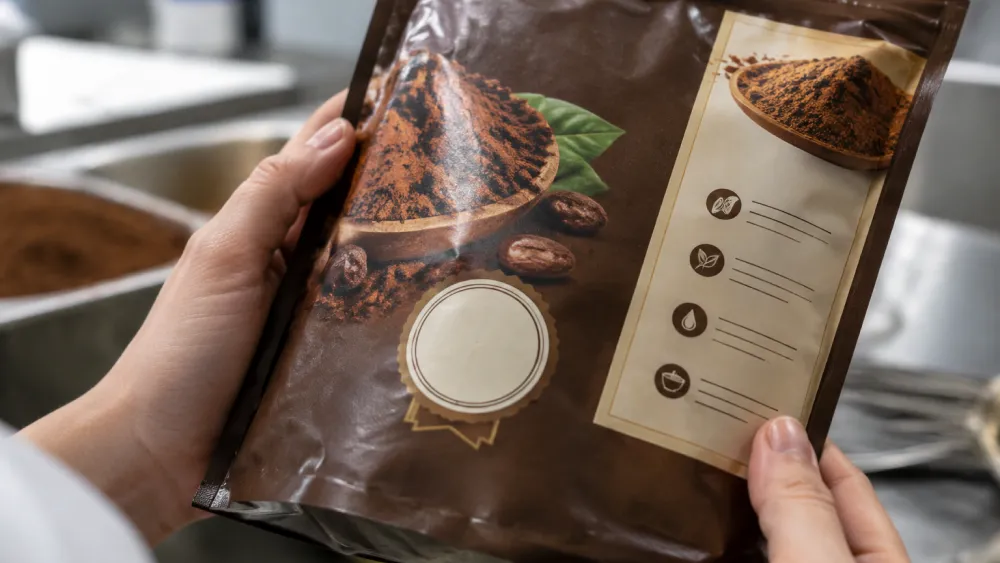
Most confusion around cocoa and gluten comes from mixing up two product categories. Pure cocoa powder is one ingredient. Hot chocolate mixes, drinking chocolate, and instant cocoa are formulated beverages built from sugar, milk solids or non-dairy creamers, and cocoa, plus the additives that make them dissolve and taste consistent. Those additives are where gluten enters. Barley malt extract is a classic flavoring in drinking chocolate, modified starch can be wheat-derived, and flavor carriers sometimes use malt-based ingredients. Gluten-free hot chocolate powder and gluten-free chocolate powder do exist as product categories, but the claim has to survive the ingredient list. When the list names malt, malt extract, or unspecified "natural flavors," the product needs a direct answer from the manufacturer before anyone relying on a gluten-free claim can trust it.
How to Check Whether Any Cocoa Powder Is Gluten-Free
Questions about specific brands, whether Hershey's, Cadbury, Nestlé, or Ghirardelli, all reduce to the same three-step check, and the check works for any product on any shelf:
Read the ingredient list. A single ingredient, cocoa, means the powder is naturally gluten-free. Anything else has to be evaluated item by item, with malt-based ingredients as the first red flag.
Look for a certification or an official statement. A GFCO or equivalent mark settles the question. Without one, most major brands publish allergen information on their websites, and the brand's own page is more current than any third-party list, including this one.
Ask the manufacturer directly. For private-label or unlisted products, ask two specific questions: is the product tested for gluten, and is it made on shared equipment with gluten-containing products? A vague answer is also an answer.
Brand formulations and facility assignments change, so treat any static "safe brands" list as a starting point rather than a verdict. If you also need to confirm what else is in a powder, such as fillers, alkalizing agents, or fat grade, our guide on how to verify what else is in your cocoa powder covers the specification side.
Sourcing Gluten-Free Cocoa Powder in Bulk: A Buyer's Checklist
For brands and manufacturers building gluten-free product lines, reading retail labels is not enough. Verification happens at the supplier level, before the first purchase order. Five questions cover it:
Is the supplier a single-category producer? A plant that processes only cocoa products has no grain on site, which removes the largest cross-contact source structurally rather than procedurally.
Does the food safety system include allergen management? FSSC 22000 certification requires a documented allergen management plan with cross-contact controls. Ask for the certificate and its scope.
Can the supplier provide gluten testing? Ask whether gluten can be added to the certificate of analysis or supplied as a separate ELISA test report, and at what limit of detection. A supplier who tests routinely will answer in one email.
Is there third-party gluten-free certification? GFCO or an equivalent scheme audits both ingredients and finished product against a 10 ppm limit.
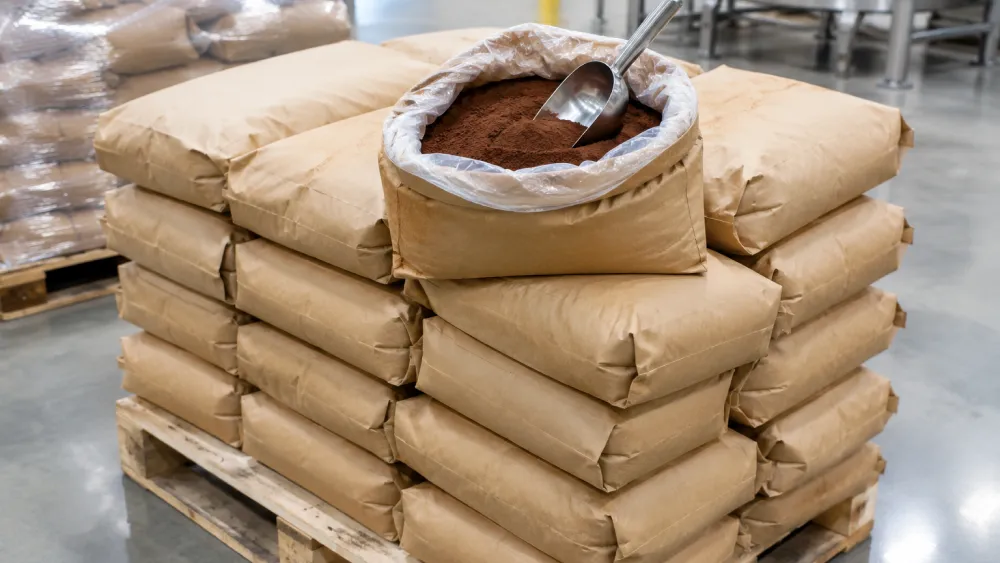
How is the product packed and shipped? Sealed 25 kg paper bags with PE liners protect powder from warehouse-level cross-contact during mixed storage and transit.
Huanda Cocoa's setup answers the first two questions directly. We process only cocoa products, powder, butter, and mass, from West African beans at our FSSC 22000 certified plant, so no gluten-containing material enters the facility. Every batch ships with a COA covering fat content, moisture, pH, and color value, and the full specification is on our bulk cocoa powder specifications page. For allergen management documentation, or to confirm what testing we can provide for a specific lot and target market, contact our team. Buyers running parallel checks on vegan claims can apply the same framework in our vegan label verification guide.
FAQ