













Dark Cocoa Powder vs Black Cocoa: How to Choose the Right One
Dark cocoa powder and black cocoa powder both come from alkalized processing, both look dark, and they get mixed up constantly in purchasing and recipe work. The difference fits in one sentence: dark cocoa powder is a deepened version of Dutch-process cocoa with a pH around 7.0 to 8.0 that balances color and chocolate flavor, while black cocoa powder is alkalization pushed to its limit at pH 8.0 to 9.0, where color wins and flavor steps back. The cost of picking the wrong one is immediate. Bake a chocolate cake with black cocoa and the color looks right but the taste falls flat. Bake Oreo-style cookies with dark cocoa and they never get dark enough. This guide lays out the specs, the best uses, and the substitution rules for both.
The one-sentence difference
Dark cocoa powder is a flavor-led dark powder: moderately heavy alkalization deepens the color to a rich brown while keeping the core chocolate taste intact. Black cocoa powder is a color-led powder: heavy alkalization takes it near black, and its main job is to make products look black, with a mild and weakly chocolate flavor. One serves taste and deepens color along the way; the other serves color and gives up some taste to get there.
Same alkalization scale, two positions
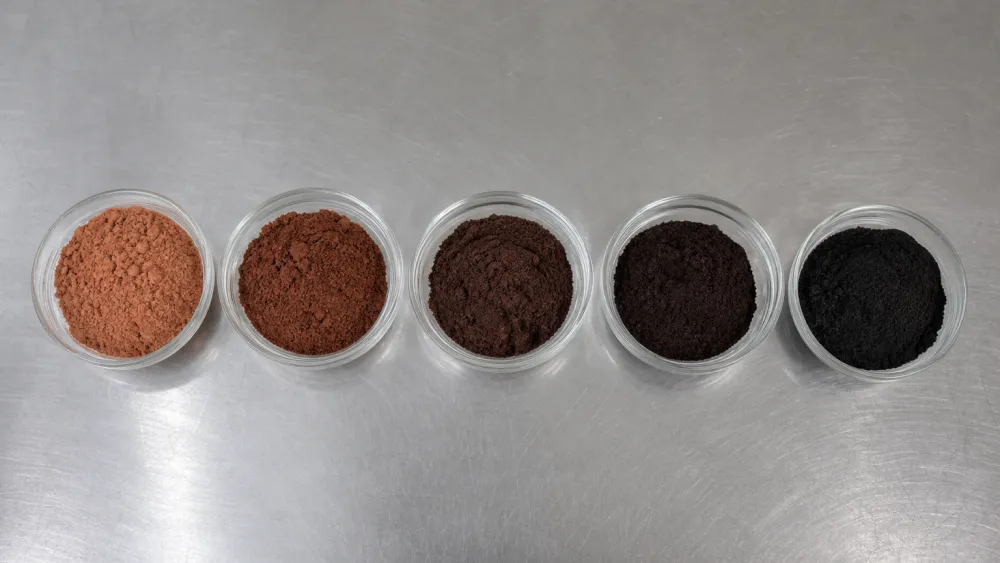
Both powders belong to the Dutch-process (alkalized) family. Alkalization treats cocoa nibs, liquor, or pressed cake with a potassium carbonate solution, and the intensity of that treatment sets the final pH: natural cocoa sits at 5.0 to 5.8, standard Dutch-process at 6.8 to 7.5, dark cocoa at roughly 7.0 to 8.0, and black cocoa at 8.0 to 9.0. The further you go, the more the cocoa polyphenols oxidize and polymerize into dark pigments, the deeper the color gets, and the more acids and volatile flavor compounds are stripped out. For the full process background, see our guide to Dutch-process cocoa.
Specs side by side
| Parameter | Dark cocoa powder | Black cocoa powder |
|---|---|---|
| pH range | 7.0 to 8.0 | 8.0 to 9.0 |
| Color | Deep brown | Near-black to jet black |
| Flavor | Smooth and full, chocolate taste well retained | Mellow and roasted, weak chocolate notes |
| Primary role | Flavor and color together | Coloring first |
| Common fat content | 10-12% or 20-24% | Mostly 10-12% |
| Leavener pairing | Baking powder | Baking powder |
| Typical uses | Chocolate cakes, brownies, hot cocoa, beverages | Sandwich cookies, black frostings, coloring and decoration |
One caution: "dark" is not a regulated term. Retail dark cocoas are sometimes a single extra-Dutched powder and sometimes a blend of natural and Dutched cocoa. Hershey's Special Dark is the blend type. Buy on pH and color values, not on the name.
How the color and flavor differences play out
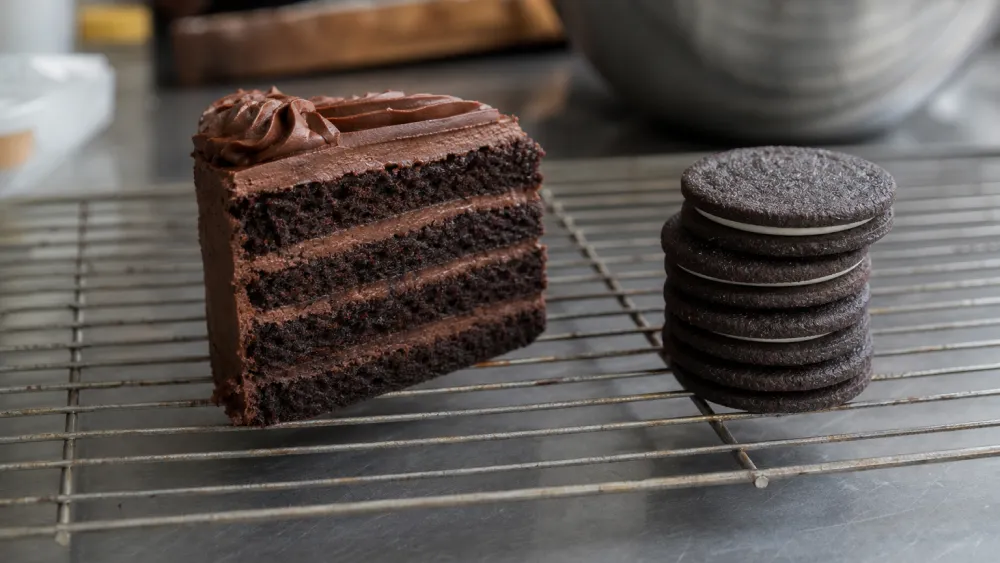
In baked goods, dark cocoa comes out a rich chocolate brown while black cocoa comes out charcoal black. You can see the gap from across the room. The color chemistry and the upper limits of alkalization are covered in our article on black cocoa powder.
The flavor gap matters even more. Dark cocoa is alkalized moderately, so the acids are softened but the body of the chocolate flavor survives, and it can carry a product on its own. Black cocoa loses most of that flavor to heavy alkalization. Used alone it tends to look very chocolate and taste not very chocolate, which is why the industry usually blends it with a flavor-led cocoa.
The American bakery Baked ran a well-known side-by-side test: the same chocolate sponge made with natural, Dutch-process, and black cocoa. All three cakes rose identically and had identical texture. The differences were entirely in color and taste. That result is useful for any factory: swapping between the two alkalized powders carries less leavening risk than people assume. Color and flavor are the real battleground.
Where red cocoa and other grades fit on the scale
The same alkalization ladder holds a few more grades buyers ask about. Red or rouge cocoa sits between standard Dutch and dark cocoa, with a reddish-brown tint from milder alkalization; it shows up in red velvet and premium European bakery work. Extra-brute styles from French producers occupy similar territory. These names describe color families, not specifications, and two powders sold under the same label can differ by a full pH point. The practical habit is the same one that applies to dark and black cocoa: treat the name as marketing and the pH plus color values as the product.
Which one for which application
Choose dark cocoa powder for chocolate cakes, brownies, and cookies where taste and color both matter, for hot cocoa and drink mixes, and for ice cream and dairy desserts. Most products that sell on a "chocolate taste" promise run on dark cocoa as the workhorse. In beverages it earns its keep twice: the fuller flavor carries the drink, and the deeper color signals richness in the cup before the first sip.
Choose black cocoa powder for Oreo-style sandwich cookies and wafers, for black buttercream and frostings that avoid heavy dye loads, for dark coatings and dusting, and for decoration that needs strong visual contrast. These products sell on being black.
A simple rule of thumb: if the product wins on chocolate taste, use dark cocoa; if it wins on black appearance, use black cocoa; if it needs both, blend them in proportion.
Substitution and blending rules
Swapping is safe. Both powders are alkalized and both pair with baking powder, so a one-to-one swap will not break the leavening system. The consequence of swapping is a color and flavor shift, not a structural failure.
Dark to black: the result gets noticeably darker and milder. Replace 25 to 50% of the cocoa first, check the color in a test bake, then decide whether to go further.
Black to dark: the result gets lighter and browner with a stronger chocolate taste. Oreo-type products will miss the color target.
The classic blend: black cocoa at 25 to 50% of total cocoa, with dark or standard Dutch cocoa carrying the flavor. Wafers and biscuits can run 100% black cocoa.
No fat adjustment needed: both grades usually run 10 to 12% fat, so swapping between them does not change the oil balance. Only a switch from a 20 to 24% high-fat cocoa calls for compensation.
If the recipe starts from natural cocoa with baking soda, the leavener conversion ratios are in our Dutch cocoa baking guide.
Common mistakes when switching grades
Three errors account for most failed grade changes we see in customer projects:
Assuming "dark" means the same thing across brands. One supplier's dark cocoa can match another's standard Dutch. Always compare pH and color values before assuming a swap is equal.
Judging color on raw batter or dough. Alkalized powders darken further during baking. Evaluate shade on a finished test bake, and if possible on a shelf-aged sample, before committing to a blend ratio.
Recalculating cost on a like-for-like basis. Black cocoa colors aggressively, so effective dosage is often lower. A blend can cost less per batch than a full dose of premium dark cocoa while hitting the same visual target.
Buy by numbers, not by name
"Dark" and "black" are trade terms with no legal definition. Two suppliers can sell powders one alkalization level apart under the same name. Industrial buyers should lock the grade with these steps:
Write the target pH and a ±0.2 tolerance into the specification. pH is the most reliable predictor of color and flavor behavior.
Ask for L*a*b* color values on the COA and lock the shade into your product spec, then compare batches on data.
Confirm whether the powder is a single extra-Dutched grade or a blend. The two have completely different flavor curves.
Request retention samples from two or three lots. Color drift between batches is the most common complaint with heavily alkalized grades.
Check FSSC 22000, Halal, or Kosher certificates plus cadmium and lead results for your target markets.
For a broader framework on evaluating grades, fat levels, and certifications, see our cocoa powder product page.
Work with a manufacturer that covers the full alkalization range
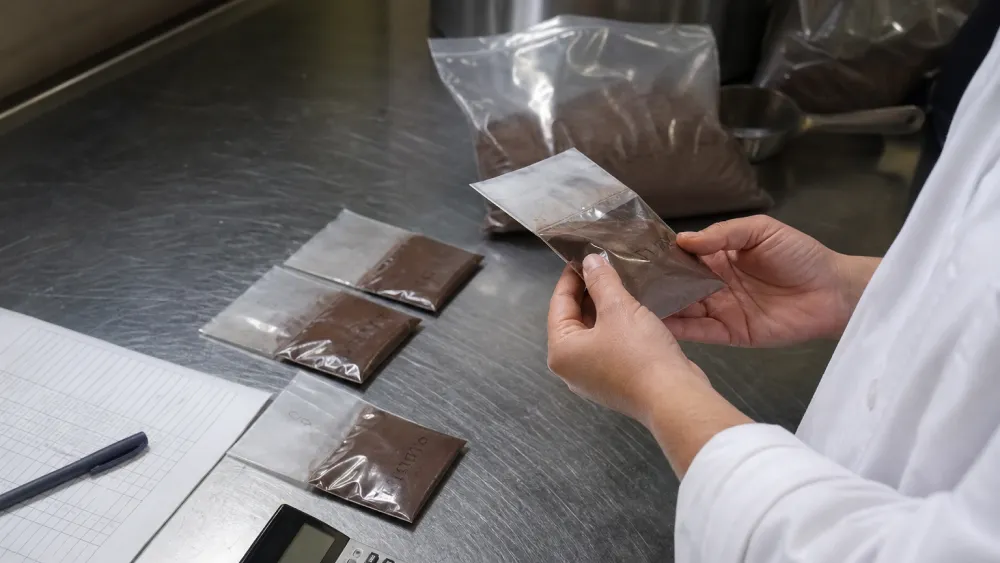
Dark and black cocoa are both precision products: small swings in alkalization show up directly as color swings in your finished goods. Huanda Cocoa produces cocoa powders across the full alkalization range, with dark and black grades made to fixed pH and color specifications in FSSC 22000 and Halal certified plants in Asia. Send us your target shade and fat content, and we will match a grade and ship a free sample for your own testing. Reach our team through the contact page.
FAQ