













Black Cocoa Powder: Properties, Uses & Sourcing Guide(53 chars)
Black cocoa powder is the darkest cocoa you can buy. It is the ingredient behind the near-black crumb and mellow taste of Oreo-style sandwich cookies, and it shows up anywhere a product needs a true black color without food dye. Despite the dramatic look, black cocoa is simply cocoa powder pushed to the far end of alkalization. That single processing decision changes its pH, color, flavor, and how it behaves with leaveners. This guide covers what black cocoa powder is, how it is made, where it performs best, how much to use in a formula, and what to check when sourcing it for industrial production.
What is black cocoa powder?
Black cocoa powder is a heavily alkalized cocoa powder, sometimes labeled ultra-Dutched or jet black cocoa. It starts life like any other cocoa powder: cocoa beans are fermented, roasted, ground into liquor, and pressed to remove most of the cocoa butter. The difference sits in the alkalizing step. Standard Dutch-process cocoa is treated with an alkali solution to raise its pH from the natural 5.0 to 5.8 range up to roughly 6.8 to 7.5. Black cocoa goes through a stronger or longer alkalization that pushes the pH to about 8.0 to 9.0 and turns the powder from brown to deep charcoal.
Because black cocoa sits inside the Dutch-process family, it behaves like other alkalized cocoas in a recipe. It carries almost no acidity, pairs with baking powder rather than baking soda, and disperses easily into liquids and fat. What sets it apart is degree, not category. If you need the full background on how the two families differ, our comparison of natural and Dutch-process cocoa covers the chemistry in detail.
How heavy alkalization turns cocoa black
Alkalization, often called Dutching, means treating cocoa nibs, liquor, or pressed cake with an alkali solution, most commonly potassium carbonate. Three variables decide the outcome: alkali concentration, temperature, and time. A light treatment gives a medium brown powder with a softened flavor. A heavy treatment, the kind used for black cocoa, drives two chemical changes much further.
First, the alkali neutralizes the natural acids in cocoa, which is why pH climbs toward 8.0 and above. Second, under alkaline and warm conditions, the polyphenols in cocoa oxidize and polymerize into dark pigments. Those pigments are what turn the powder from reddish brown to near-black. The same reaction also strips out most of the sharp, fruity notes that define natural cocoa, leaving a smooth, roasted, slightly earthy taste.
There are trade-offs. Heavy alkalization cuts flavanol content sharply, so black cocoa is a poor choice if antioxidant retention is the goal. It also mutes classic chocolate intensity, which is why black cocoa is rarely used alone for flavor. What you gain is color, mildness, and excellent wetting and dispersion in liquids, batters, and fat-based systems.
Black cocoa powder specifications at a glance
For buyers and R&D teams, these are the parameters that define a black cocoa grade:
| Parameter | Typical black cocoa value | Why it matters |
|---|---|---|
| pH | 8.0 to 9.0 (most grades 8.0 to 8.6) | Controls color depth, flavor smoothness, and leavener choice |
| Fat content | 10 to 12% cocoa butter | Low fat gives a dry, crisp crumb in biscuits and wafers |
| Color | Dark brown-black to jet black | The main reason to buy this grade |
| Flavor | Mellow, roasted, low bitterness | Works as a color tool more than a flavor base |
| Dispersibility | Very good, wets out fast | Suits beverages, icings, and dairy systems |
| Fineness | 99%+ through 200 mesh (75 µm) | Prevents grittiness in creams and coatings |
Values vary by producer, so always confirm them against the specification sheet rather than the product name. The word "black" is not regulated, and powders sold under it can range from extra-dark Dutch cocoa to true jet black grades.
Black cocoa vs. dark cocoa, Dutch, and natural
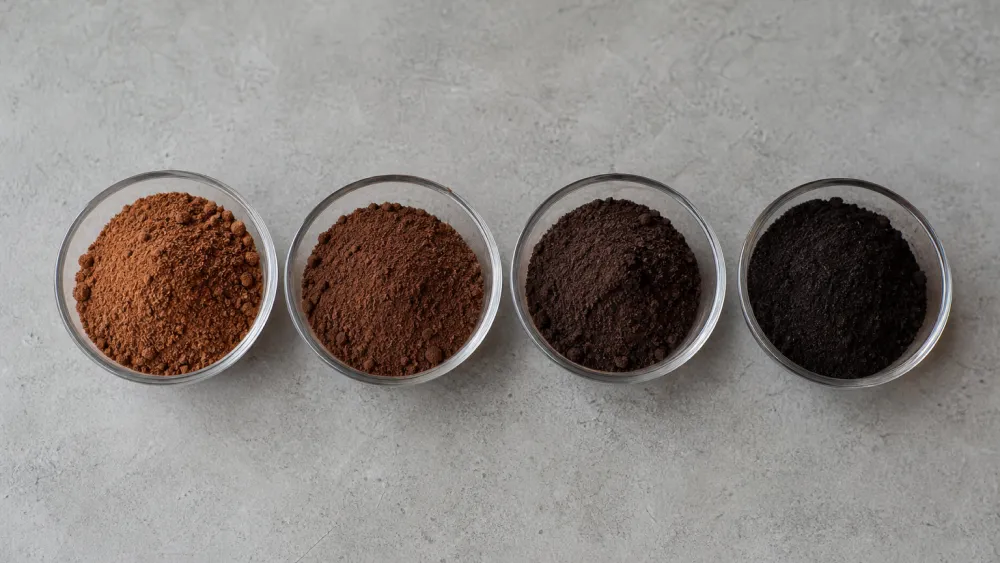
These four labels sit on one alkalization scale, and confusing them is the most common sourcing mistake we see. This table lines them up:
| Type | pH range | Color | Flavor | Leavener pairing |
|---|---|---|---|---|
| Natural | 5.0 to 5.8 | Light reddish brown | Sharp, fruity, intense | Baking soda |
| Dutch-process | 6.8 to 7.5 | Medium to dark brown | Smooth, rounded | Baking powder |
| Dark (extra-Dutched) | 7.5 to 8.0 | Deep brown | Deeper, mild roast | Baking powder |
| Black | 8.0 to 9.0 | Near-black to jet black | Mellow, earthy, Oreo-like | Baking powder |
One retail note: products like Hershey's Special Dark are blends of natural and Dutched cocoa, not true black cocoa. They bake to a dark brown, not a black, and taste noticeably more chocolatey. If a formula was developed on a retail "dark" blend, switching to black cocoa one-for-one will overshoot the color target.
Why black cocoa tastes like an Oreo
The flavor of an Oreo wafer is the reference point most people know, and it comes straight from heavily alkalized cocoa. With the acids neutralized, nothing bright or sharp competes with the roasted notes, so the cocoa reads as dark and toasted rather than chocolatey. A slight bitterness remains, but it lands as "dark cookie" on the palate, especially against a sweet cream filling.
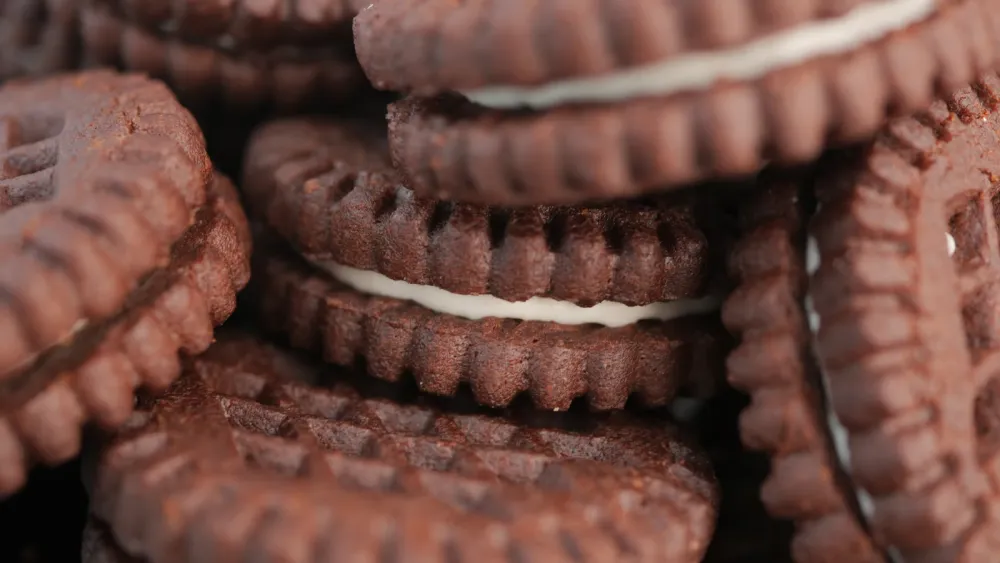
This flavor profile explains both the appeal and the limits of black cocoa. It is perfect when you want the visual drama and roasted depth of a dark biscuit. Used alone in a chocolate cake, it tends to taste flat, because the chocolate intensity lives in the acids and volatiles that alkalization removes. That is why most bakers blend it, a point we come back to in the usage ratios below.
Where black cocoa powder performs best
Black cocoa earns its place anywhere color leads the brief. The main application groups:
-
Sandwich biscuits and wafers: the classic use. Oreo-style cookies rely on black cocoa for their signature color and mild roasted taste, and the low fat content keeps the crumb crisp.
-
Dark cakes, brownies, and cookies: delivers a black or espresso-dark crumb without gel colors, which can add bitterness at high dosage and stain hands and mouths.
-
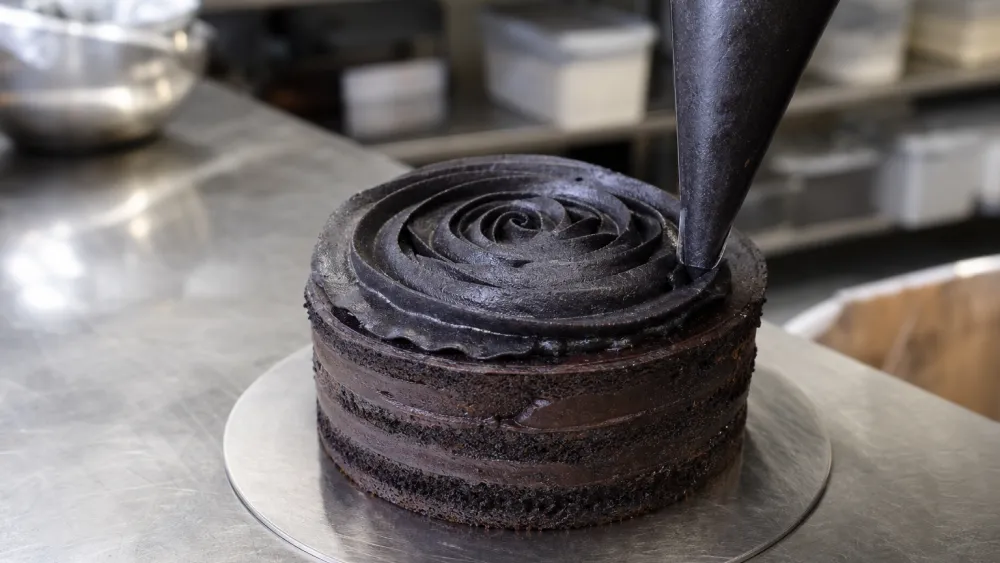
Black buttercream, frostings, and glazes: the fastest route to a true black icing. Black cocoa disperses cleanly into fat, so decorators avoid the large dye loads otherwise needed.
-
Ice cream and dairy desserts: good dispersion and stable dark color in milk-based systems.
-
Beverage and drinking chocolate blends: blended with a standard Dutch cocoa, it deepens color while the Dutch grade carries the flavor.
-
Coatings, dusting, and decoration: creates strong visual contrast on truffles, marshmallows, and plated desserts.
Where it underperforms: any product whose selling point is a strong, classic chocolate flavor. Black cocoa works as a color and roasting tool. Treat it that way and it rarely disappoints.
How to use black cocoa in a formula
The standard approach is a blend. Replacing 25 to 50% of the total cocoa in a recipe with black cocoa gives a clearly darker result while a standard Dutch or natural cocoa keeps the chocolate flavor alive. Going to 100% black cocoa makes sense for wafers, biscuits, and icings where color is the whole point. For home-style baking, keep total cocoa within the recipe's original amount and adjust only the share that is black.
Three practical rules:
-
Pair it with baking powder. Black cocoa is near-neutral, so it will not activate baking soda. If you swap it into a recipe built on natural cocoa and soda, rebalance the leavener. Our Dutch cocoa baking guide gives the exact conversion ratios.
-
Compensate for the low fat. Most black cocoa runs 10 to 12% fat and produces a drier crumb. In cakes and brownies, add a little extra butter, oil, or liquid to keep the texture right.
-
Respect the dosage. As a starting point, sponge and biscuit formulas often run cocoa at 10 to 15% of flour weight, and ice cream at 8 to 10% of total mix weight. Black cocoa colors aggressively, so you can often sit at the low end and still hit the target shade.
Color also deepens during baking, so judge the shade on a finished test bake rather than on the raw batter.
What to check when sourcing black cocoa powder
Because "black" is an unregulated trade term, industrial buyers should specify the grade by numbers, not by name. The checkpoints that matter most:
-
pH with a tight tolerance: ask for 8.0 to 8.6, or your target, with a ±0.2 window. pH is the single best predictor of color and flavor behavior.
-
Color values on the COA: L*a*b* measurements let you compare batches objectively and lock a shade into your product spec.
-
Fat content and fineness: confirm 10 to 12% fat for biscuit work and 99%+ through 200 mesh for creams and beverages.
-
Food safety documentation: microbiological limits, cadmium and lead results for EU compliance, and current FSSC 22000, Halal, or Kosher certificates depending on your markets.
-
Batch consistency: request retention samples across two or three lots. Color drift between batches is the most common complaint with heavily alkalized grades.
For a wider framework on evaluating grades, fat levels, and certifications, see our guide to choosing cocoa powder for industrial use.
Work with a black cocoa powder manufacturer
Black cocoa is a precision product: small shifts in alkalization show up directly as color shifts in your finished goods. Huanda Cocoa produces cocoa powders across the full alkalization range, including heavily alkalized black grades, all to fixed pH and color specifications from FSSC 22000 and Halal certified plants in Asia. If you are developing a dark biscuit, black icing, or colored dairy product, send us your target shade and fat content and we will match a grade and ship a free sample for your own testing. Reach our team through the contact page.
FAQ