













Raw Cacao Powder: Claims and Reality
Raw cacao powder is cocoa powder's unroasted sibling: fermented cacao beans pressed at low temperature, with the roasting step skipped. That single difference supports an entire premium category in health food, plus a long list of health claims. Some of those claims are accurate, some are stretched, and a few are wrong. This guide goes through what raw cacao powder actually is, how its nutrition compares with regular cocoa powder, which claims hold up against published research, and where the powder makes sense in product development.
What raw cacao powder actually is
Raw cacao powder is made by pressing fermented, unroasted cacao beans or nibs to remove part of the cacao butter, then milling the remaining cake into powder. Producers in this segment advertise low-temperature processing, usually described as staying below 42 to 48°C (around 118°F) at every step after fermentation, including the pressing stage that the industry calls cold-pressing.
What comes off a cold press looks and handles much like any natural cocoa powder: a fine, light to medium brown powder with an acidic pH. Fat content lands in the usual 10 to 14% window depending on how hard the cake was pressed, and the powder disperses in liquid the same way natural cocoa does. The differences sit in chemistry and flavor, not in how the powder behaves on a production line.
Two facts matter before anything else. First, no food regulator defines the term "raw" for cacao: neither the FDA nor the EU has a standard, so any supplier can print the word on a bag. Second, the trade convention of using "cacao" for less-processed forms and "cocoa" for more-processed ones is exactly that, a convention, not a rule. The full terminology background is in our article on the difference between cacao and cocoa. In practice, buying on the word "raw" alone tells you nothing verifiable; the processing record and the lab data are what count.
The part marketing leaves out: fermentation is heat too
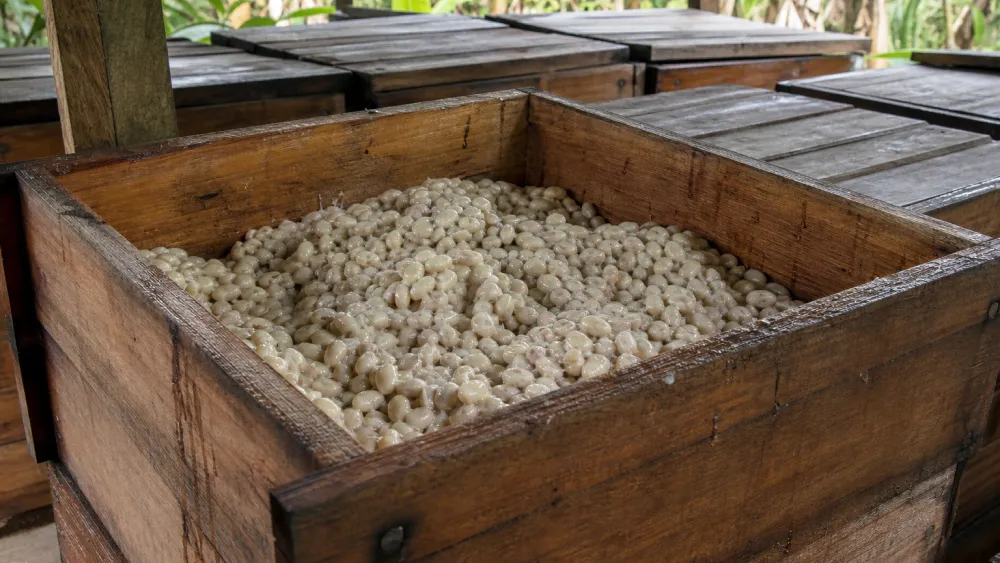
Every commercial raw cacao powder starts from fermented beans. Fermentation is not optional in cacao production: it runs five to seven days in boxes or heaps, and the bean mass heats itself through microbial activity, typically reaching 45 to 55°C and sometimes more. That means the "never heated above 42°C" story does not survive contact with how cacao is actually grown and prepared. No commercial raw cacao is untouched by heat.
Fermentation also does more than generate heat. Research from controlled pilot-scale fermentations shows that fermentation on its own already degrades a significant share of the bean's native flavanols, before any roasting happens. Raw cacao powder is therefore unroasted, but it is not unprocessed. The honest comparison is unroasted versus roasted, and buyers should frame specifications that way.
A final nuance: some reputable raw brands apply a brief, light heating step to the bean surface before winnowing. The core stays cool, and the step exists for microbiological safety. That is responsible processing, and it shows how flexible the word "raw" is in practice.
Raw cacao vs natural cocoa powder
The correct benchmark for raw cacao is natural (non-alkalized) cocoa powder, which is roasted but not alkalized. Dutch-process cocoa sits further away, with alkalization changing pH, color, and flavor on top of the roast. Here is how the three compare:
| Raw cacao powder | Natural cocoa powder | Alkalized cocoa powder | |
|---|---|---|---|
| Roasting | None | Roasted, typically 110-170°C | Roasted, plus alkali treatment |
| pH | About 5.0-6.0, acidic | About 5.0-6.0, acidic | 6.8-8.0+, near-neutral to alkaline |
| Flavor | Bitter, fruity, acidic, no roast notes | Classic chocolate with roast depth | Smooth, mild, earthy |
| Flavanol retention | Highest in the powder category | High, below raw | Lowest, 60-80%+ lost to alkalization |
| Leavener pairing | Baking soda | Baking soda | Baking powder |
| Price position | Premium niche | Standard | Standard |
Roasting is the single largest processing step for native flavanol destruction, and hotter roasts degrade more. Alkalization is even more destructive than roasting, which is why the flavanol ranking runs raw, then natural, then alkalized. For the full picture of what heavy processing removes, see our guide to high-flavanol cocoa powder.
The health claims, checked one by one
Flavanol retention: true, with a caveat. Raw cacao powder keeps more of the bean's original flavanols than roasted cocoa powder, and far more than alkalized powder. The caveat is fermentation: a meaningful share of flavanols is already lost before pressing, so "raw" does not mean "full flavanol content of the fresh bean".
"Highest antioxidant food on the ORAC scale": a marketing artifact. ORAC scores measured antioxidant activity in a test tube, and the USDA withdrew its ORAC database in 2012 precisely because the numbers were being misused in marketing. Test-tube scores do not translate directly into effects in the body.
Minerals: real, but not exclusive to raw. Cacao powders are genuine sources of magnesium, iron, potassium, and zinc. These minerals are heat-stable, so natural cocoa powder delivers essentially the same mineral profile. This is a benefit of cacao in general, not of the raw version specifically.
"Preserved enzymes": weak. Raw food marketing often cites enzyme preservation. There is no clinical evidence that plant enzymes in cacao survive digestion in a way that matters for health.
Mood compounds: present in traces. Phenylethylamine, anandamide, and tryptophan do occur in cacao, but at low levels, and the evidence for meaningful mood effects from powder servings is thin.
Stimulants: modest caffeine, dominant theobromine. Raw cacao powder contains roughly 12 to 25 mg of caffeine per tablespoon, a fraction of a cup of coffee. The main stimulant is theobromine, which acts more gently and lasts longer.
Cadmium: the claim nobody markets. Cacao trees take up cadmium from soil, and several Latin American origins show elevated levels. No processing step in raw production removes cadmium, and the EU sets specific cadmium limits for cocoa products. A certificate of analysis with heavy metal results is a basic requirement, not a bonus.
Where raw cacao powder works, and where it doesn't
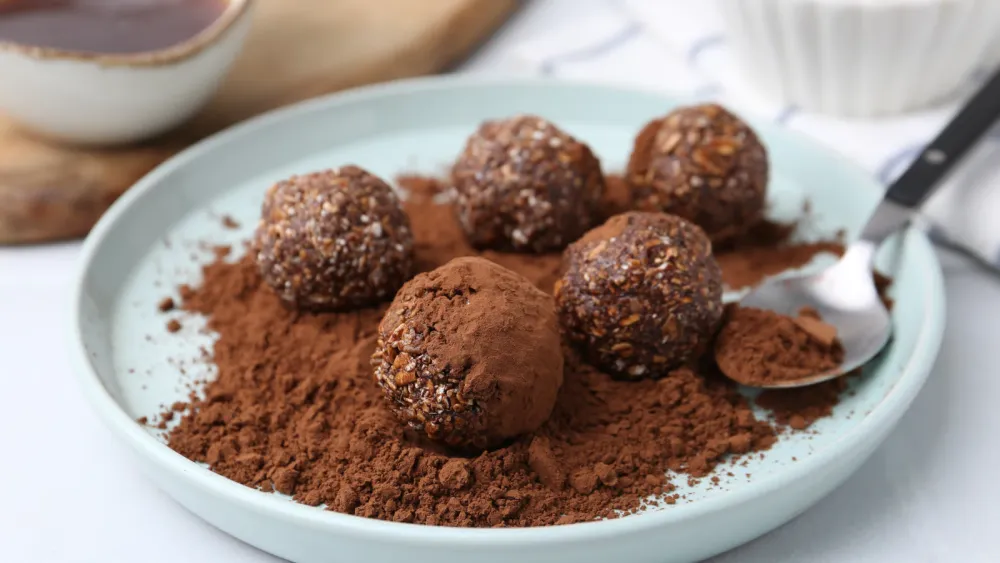
Raw cacao earns its premium in products where the unroasted story is part of the value: smoothies and shake mixes, energy balls and no-bake desserts, raw and vegan product lines, and functional blends sold on minimal processing. In smoothies it pairs well with banana, nut butters, and plant milks; our guide to cocoa powder for smoothies covers formulation basics. Hot cacao drinks are another growing use, positioned as a less-processed alternative to classic hot cocoa. The powder disperses like natural cocoa, and the bitterness needs enough sweetener and usually a pinch of salt to balance.
It is the wrong tool in three situations. First, products that need the classic roasted chocolate flavor, since unroasted cacao tastes bitter and fruity without roast depth. Second, cost-sensitive industrial bakery and beverage lines, where the premium buys nothing the customer can taste. Third, any ready-to-eat product where the supplier cannot provide per-lot microbiological validation, because skipping the roast also skips the main kill step.
One handling note applies to every application: the same flavanols that justify the premium degrade with heat, light, and air. Raw cacao powder belongs in airtight packaging, stored cool and dark, and formulations should avoid unnecessary heat holds that erase the very advantage being paid for.
Buying raw cacao in bulk: what to verify
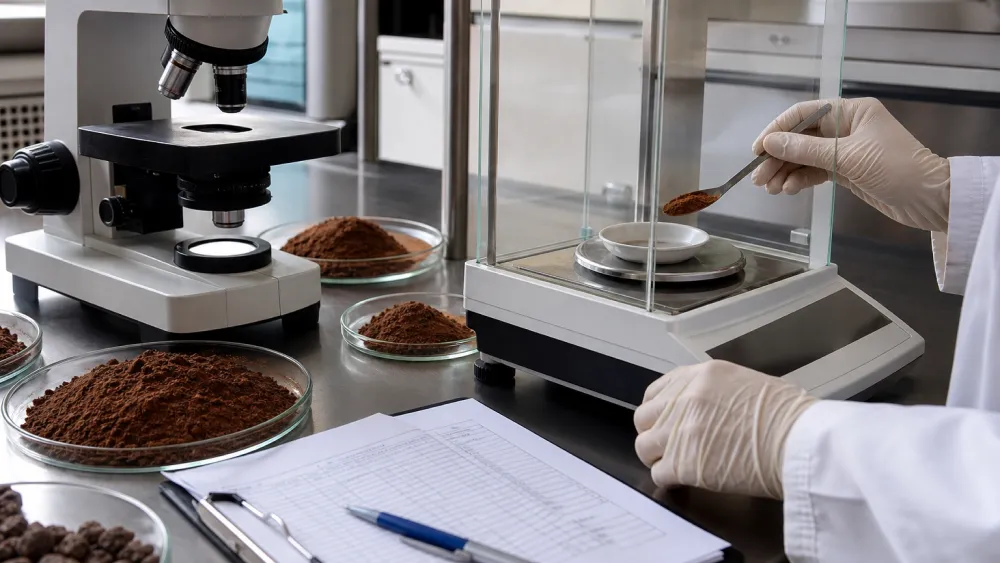
Because "raw" has no legal definition, verification has to replace the label. A purchase specification for raw cacao powder should cover:
•Per-lot microbiology: Salmonella and E. coli results at minimum. With no roasting kill step, testing does the work that heat would otherwise do.
•Heavy metals: cadmium and lead results on the COA, checked against the destination market's limits.
•Processing temperature records: if the raw claim goes on your packaging, ask for documented maximum temperatures per stage.
•Certification scope: organic claims should carry USDA, EU, or equivalent certificates that actually cover the product.
•Origin and variety: flavor, flavanol levels, and cadmium content all track origin, so lock the origin into the spec.
A manufacturer's honest position
Raw cacao powder is a legitimate niche product with a real flavanol advantage and a real marketing inflation problem. For most industrial applications, a well-made natural cocoa powder delivers the same acidic pH behavior, the roasted flavor customers expect, and strong flavanol retention at standard pricing. For genuinely raw-positioned lines, the specification and testing discipline above is what separates a verified product from a label claim. Huanda Cocoa produces natural and alkalized cocoa powders to fixed specifications in FSSC 22000 and Halal certified plants in Indonesia, China, and Cambodia, with full COA documentation per lot. Product details are on our cocoa powder page, and our team can discuss unroasted or high-flavanol specifications through the contact page.
FAQ