













Cocoa Powder Cups to Grams: Full Conversion Guide + Chart
Why Add Cocoa Powder to Smoothies?
Cocoa powder is one of the simplest ways to add real chocolate flavor to a smoothie — no sweeteners, no fillers. One or two tablespoons is usually enough. But the type you pick makes a real difference in taste, nutrition, and how well it mixes.
Two tablespoons of unsweetened cocoa powder (about 10–14g) delivers approximately 25 calories, 3–4g of fiber, meaningful amounts of magnesium, iron, and potassium, plus flavonoids — a class of antioxidants linked to heart and metabolic health. It blends smoothly with bananas, nut butters, oat milk, and dairy proteins, making it one of the most cost-effective functional ingredients for chocolate-flavored beverage applications.
| Nutrient | Per 2 tbsp (~12g) | Function |
|---|---|---|
| Calories | ~25 kcal | Low-calorie addition |
| Fiber | ~3–4g | Gut health, satiety |
| Magnesium | ~60mg (~15% DV) | Muscle and nerve function |
| Iron | ~1.7mg (~9% DV) | Oxygen transport |
| Potassium | ~183mg | Electrolyte balance |
| Flavonoids | Significant | Antioxidant, cardiovascular support |
| Protein | ~2.4g | Plant protein contribution |
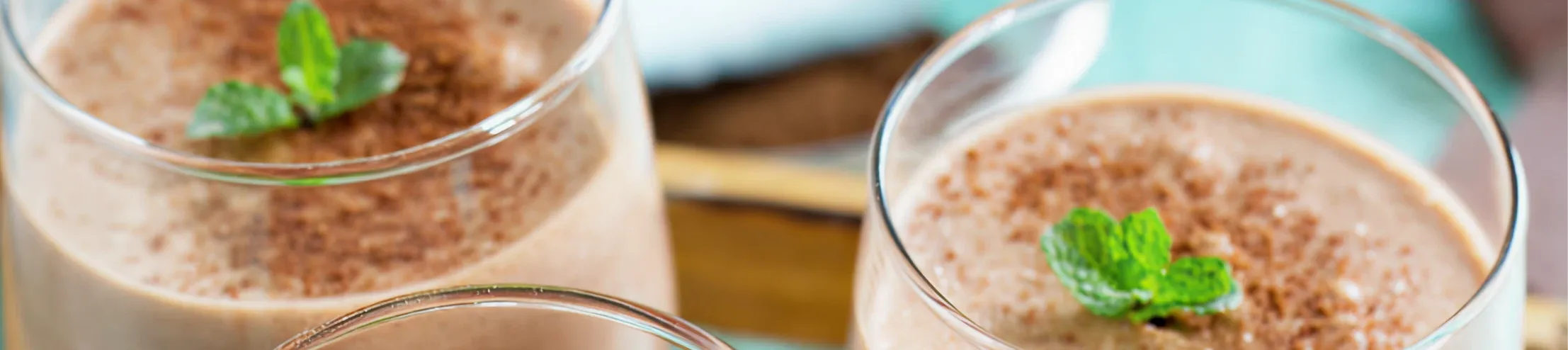
How Much Cocoa Powder to Add to a Smoothie?
For a single-serve smoothie (approximately 400–500ml), the standard range is 1 to 2 tablespoons (7–14g). This gives a clear chocolate flavor without excessive bitterness.
| Amount | Grams | Flavor Intensity | Best For |
|---|---|---|---|
| 1 teaspoon | ~2.5g | Light cocoa hint | Kids' drinks, mild flavor |
| 1 tablespoon | ~7g | Medium chocolate | Everyday breakfast smoothie |
| 2 tablespoons | ~14g | Rich chocolate | Post-workout recovery drink |
| 3 tablespoons | ~21g | Deep, intense | Low-sugar, dark chocolate fans |
If bitterness is an issue, reduce the cocoa by one teaspoon or add natural sweeteners like ripe banana or dates. Natural cocoa tends to taste sharper than Dutch-process.
Natural Cocoa vs. Dutch-Process: Which Is Better for Smoothies?
For smoothies, both types work. There's no leavening chemistry involved, so the pH difference doesn't create technical problems. The choice comes down to flavor, color, and solubility.
| Type | pH | Flavor | Color | Dispersibility | Antioxidants |
|---|---|---|---|---|---|
| Natural Cocoa | 5.0–6.0 | Fruity, sharp, bold | Light to brown | Moderate | Higher |
| Dutch-process | 7.0–8.0 | Smooth, mild, round | Dark brown/black | Better | Lower |
For daily health smoothies: natural cocoa powder retains more polyphenols and flavonoids. The slightly sharper flavor pairs well with banana, berries, or nut butter to balance acidity.
For beverage manufacturing and RTD applications: Dutch-process cocoa — especially 10–12% fat, fine-milled grades — disperses more evenly in cold or warm liquid. Color is deeper and more uniform, which matters for branded products.
Our Dutch-process cocoa uses less than 2% potassium carbonate, preserving natural aroma while achieving the solubility and pH neutrality needed for beverage applications. View our cocoa powder range →
What About "Chocolate Powder" for Smoothies?
"Chocolate powder" or "drinking chocolate" typically contains added sugar, milk solids, and sometimes flavorings. It's formulated for quick dissolving in hot water or milk — not the same as unsweetened cocoa powder.
| Product Type | Added Sugar | Smoothie Use | Calories/tbsp |
|---|---|---|---|
| Unsweetened cocoa powder | None | Best choice | ~12 kcal |
| Dutch-process cocoa powder | None | Preferred for dispersibility | ~12 kcal |
| Hot cocoa mix | High (10–20g/serve) | Adds unnecessary sugar | ~40–50 kcal |
| Chocolate drink powder | Very high | Not recommended | ~50–70 kcal |
If your recipe calls for "chocolate powder for smoothies," using unsweetened cocoa powder gives you full control over sweetness and caloric density — and a cleaner ingredient label.
How to Use Cocoa Powder in Smoothies — Practical Tips
Mixing and Dispersion
Cocoa powder doesn't dissolve in cold liquid the way sugar does — it disperses. To avoid clumping:
Add cocoa directly to the blender. The blending action distributes the powder evenly.
Add a liquid first. Pour milk, plant milk, or yogurt before adding cocoa. This helps initial wetting.
Sift if stored long. Cocoa clumps in humid conditions. Sifting before use prevents unblended pockets.
Dutch-process disperses better. For cold-blended beverages, alkalized cocoa performs more consistently.
Flavor Pairing
Banana: Natural sweetness and creamy texture. Frozen banana works best for thickness.
Nut butter: Peanut or almond butter adds fat that rounds out bitter notes and improves mouthfeel.
Dates: Natural sweetener with lower glycemic impact than refined sugar.
Oat milk / dairy milk: Both work. Dairy proteins slightly reduce astringency from cocoa tannins.
Vanilla extract: Half a teaspoon amplifies perceived chocolate flavor and reduces bitterness.
Common Smoothie Combinations
| Smoothie | Key Ingredients | Cocoa Type | Amount |
|---|---|---|---|
| Classic chocolate banana | Banana + milk/oat milk + Greek yogurt | Natural cocoa | 1–2 tbsp |
| High-protein shake | Protein powder + almond milk + peanut butter | Alkalized (dark) | 2 tbsp |
| Green chocolate | Spinach/kale + banana + plant milk | Natural cocoa | 1.5 tbsp |
| Berry chocolate | Mixed frozen berries + banana + coconut milk | Natural cocoa | 1 tbsp |
| Low-carb keto | Avocado + unsweetened almond milk + chia seeds | Alkalized cocoa | 2 tbsp |
Which Grade of Cocoa Powder Is Best for Smoothies?
From a manufacturing and sourcing perspective, the key specs to look at are fat content, particle size, and pH.
Fat content 10–12%: Standard for beverage applications. Lower fat means better flow and dispersion in liquid.
Fine particle size: Reduces visible specks in finished beverages and improves mouthfeel.
Alkalized pH 6.5–7.5 for cold drinks: Neutral pH helps cocoa particles wet out faster in cold liquid — important for cold-blend smoothie production.
Natural cocoa for maximum antioxidant retention: If the end-use positioning is "health smoothie," natural cocoa supports a stronger nutritional claim.
We offer 16 grades of natural and alkalized cocoa powder, 10–12% fat content, FSSC22000 and Halal certified, suitable for beverage, meal replacement, and sports nutrition applications.
View our full cocoa powder range → | Download product datasheets → | Request a sample or bulk quote →
FAQ