













Cocoa Powder Types: Natural, Dutch-Process, Black, and How to Choose
Cocoa powder types are classified along four axes: process (natural or alkalized), fat content (low-fat, standard, high-fat), color and alkalization depth (light brown through black), and application performance. Most names you meet on labels and in search results — Dutch-process, dark, red, black — sit inside these four axes instead of describing separate, unrelated products.
This article first sorts out the main types and the names behind them, then converts each type into specifications a food manufacturer can verify on a certificate of analysis: pH, fat, fineness, dispersibility, and microbiology.
What Are the Main Types of Cocoa Powder?
The main types of cocoa powder are natural cocoa powder, Dutch-process (alkalized) cocoa powder, and heavily alkalized variants sold as dark, red, or black cocoa powder. A second, independent classification runs on fat content: low-fat (4–8%), standard (10–12%), and high-fat (20–24%). Any commercial cocoa powder can be described by combining one process type with one fat band.
The table below puts both axes in one view.
| Type | Process | Typical pH | Fat band | Color | Common uses |
|---|---|---|---|---|---|
| Natural cocoa powder | Roasted beans ground, pressed, milled; no alkalization | 5.0–5.8 | 10–12%, also 4–8% | Light to medium brown | Soda-leavened baking, beverages, chocolate-flavored goods |
| Dutch-process (alkalized) | Nibs or liquor treated with an alkaline solution such as potassium carbonate | 6.0–7.8 | 10–12%, also 4–8% | Medium to dark brown, often reddish | Beverages, dairy, ice cream, cookies, coatings |
| Dark / red cocoa powder | Deeper alkalization within the Dutch range | 7.5–8.0 | Usually 10–12% | Deep brown to reddish-brown | Sandwich biscuits, dark cakes, visual contrast |
| Black cocoa powder | Heavy alkalization | 8.0–9.0 | Usually 10–12% | Near-black | Coloring blends, dark biscuits, decorative contrast |
| Low-fat cocoa powder | More cocoa butter pressed out of the liquor | Same as base type | 4–8% | Same as base type | Beverages, low-fat formulas, cost-sensitive recipes |
| High-fat cocoa powder | Less cocoa butter pressed out | Same as base type | 20–24% | Same as base type | Premium baked goods, rich chocolate flavor systems |
Two items frequently mixed into this list are not cocoa powder types at all. Hot cocoa mix is a beverage blend of cocoa powder with sugar and often milk solids. Brand names such as Hershey's Natural or Special Dark describe one manufacturer's product, not a category. When you compare or buy cocoa powder, work with the process type, the fat band, and the pH — the label names follow from those.
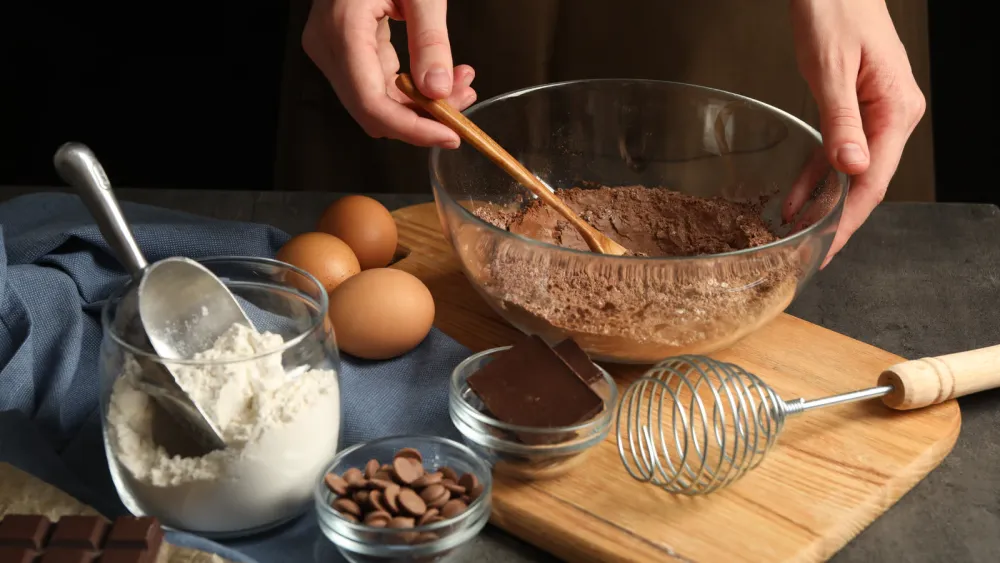
Natural vs Dutch-Process Cocoa Powder: What Is the Difference?
Natural cocoa powder is cocoa liquor pressed and milled without any pH treatment, so it keeps the bean's natural acidity at pH 5.0–5.8. Dutch-process cocoa powder is treated with an alkaline solution, which raises the pH to roughly 6.0–7.8, darkens the color, and softens the acidity into a smoother, earthier flavor.
The practical difference shows up in the leavening system. Natural cocoa powder is acidic enough to react with baking soda, so classic American recipes pair the two. Dutch-process cocoa is near neutral, so it needs baking powder, which carries its own acid. Swapping one for the other without adjusting the leavening changes both rise and flavor.
| Dimension | Natural cocoa powder | Dutch-process cocoa powder |
|---|---|---|
| pH | 5.0–5.8 (acidic) | 6.0–7.8 (near neutral) |
| Processing | Pressed and milled only | Alkalized before or after pressing |
| Flavor | Sharp, fruity, more acidic bite | Milder, smoother, more earthy |
| Color | Light to medium brown | Darker brown, reddish tones possible |
| Leavening match | Baking soda | Baking powder |
| Typical uses | Classic cakes, brownies, American-style recipes | Beverages, dairy, cookies, European-style recipes |
Alkalization is a control tool with a dosage, and the dosage matters. At Huanda, alkalized cocoa powder is produced with less than 2% potassium carbonate, a light treatment aimed at adjusting pH and improving dispersibility in drinks and dairy systems. Heavy alkalization, by contrast, is used when the goal shifts from pH control to deep color. For a fuller process comparison, see our article on natural vs Dutch-process cocoa powder.
What Are Dark, Red, and Black Cocoa Powders?
Dark, red, and black cocoa powders are points on the alkalization spectrum, commercial names rather than regulated definitions. As alkalization deepens, pH rises, color moves from brown toward red-brown and then toward black, and the flavor loses acidity while gaining a smooth, sometimes slightly alkaline note.
| Spectrum position | Typical pH | Color | Typical role |
|---|---|---|---|
| Natural | 5.0–5.8 | Light to medium brown | Acidic flavor base, soda-leavened baking |
| Dutch-process | 6.8–7.5 | Medium-dark brown | Balanced flavor and color for beverages and baking |
| Dark / red | 7.5–8.0 | Deep brown with red tones | Darker crumb and visual richness in biscuits and cakes |
| Black | 8.0–9.0 | Near-black | Coloring tool, usually blended at partial ratios |
Black cocoa powder behaves more like a coloring ingredient than a flavor base. Heavy alkalization strips most of the acidity and much of the classic cocoa flavor, so manufacturers commonly blend black cocoa with natural or standard Dutch-process powder instead of using it at 100%. The familiar dark sandwich biscuit is the reference application. One clarification that saves buyers time: Hershey's Special Dark is a darker retail cocoa, widely described as a blend of natural and Dutch-process cocoa; it is not the heavily alkalized black cocoa used for deep-black biscuits. For the deeper comparison, see dark vs black cocoa powder.
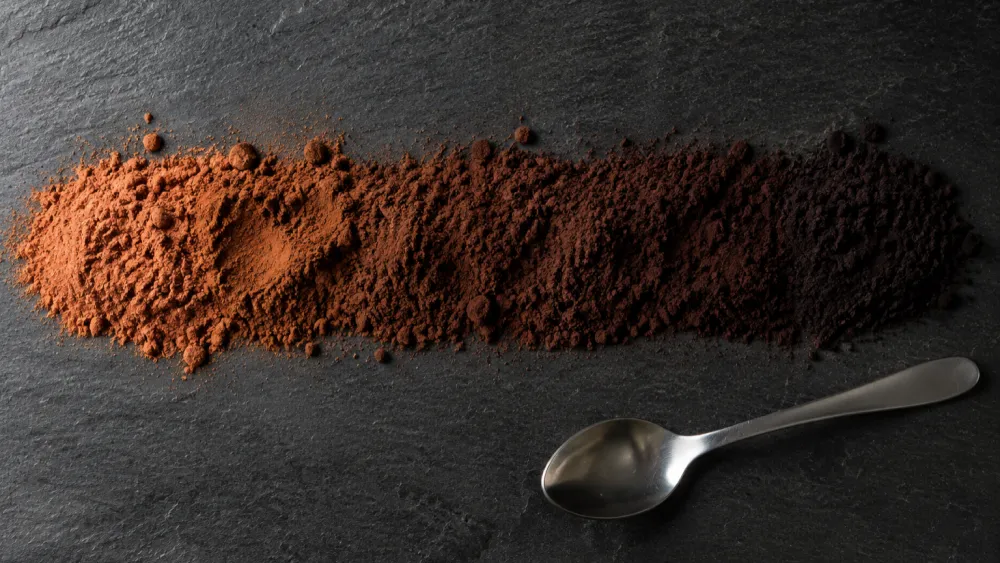
How Does Fat Content Create Low-Fat, Standard, and High-Fat Cocoa Powder?
After grinding, cocoa liquor contains roughly half cocoa butter. Pressing removes part of that fat, and how much is removed sets the fat band of the finished powder: low-fat at 4–8%, standard at 10–12%, and high-fat at 20–24%. Fat content changes texture, flavor release, and how the powder behaves in liquid systems.
| Fat band | Texture and flavor release | Behavior in liquids | Typical use |
|---|---|---|---|
| Low-fat, 4–8% | Drier, leaner flavor impact | Good flow, less richness in the cup | Beverages, low-fat and cost-sensitive formulas |
| Standard, 10–12% | Balanced flavor and mouthfeel | Reliable dispersibility, the default for most recipes | Baking, dairy, ice cream, general food manufacturing |
| High-fat, 20–24% | Richer, rounder chocolate flavor | More fat to manage in liquids; shines in fat-based systems | Premium cakes, brownies, chocolate-flavored fillings |
The 10–12% band is the global workhorse, and most published recipes and industrial formulas assume it. Huanda currently supplies the standard 10–12% band and the low-fat 4–8% band across natural, alkalized, and black types; the 20–24% high-fat band appears here as industry background so you can read competitor specifications, not as an item in our current range. The mechanics behind these bands are covered in our article on cocoa powder fat content.
Which Technical Properties Matter Beyond Type?
Type names tell you how the powder was made; they do not tell you how it will run in your plant. Two powders that are both "Dutch-process, 10–12% fat" can behave differently in a beverage line or a batter. These are the properties worth asking about before you commit to a lot.
| Property | What it changes in production | What buyers should ask for |
|---|---|---|
| pH | Flavor, color, leavening reaction, and consistency across batches | Batch COA with measured pH, not just a type name |
| Water absorption | Batter and beverage viscosity; cocoa powder can absorb up to about its own weight in water | Application testing data for your recipe system |
| Fineness | Mouthfeel, sedimentation in drinks, and color uniformity; 99% through 200 mesh is a common industry benchmark | Sieve analysis on the specification sheet |
| Dispersibility and wettability | How fast and evenly the powder enters cold milk or water; higher pH generally improves wetting | Dispersibility or sedimentation test results |
| Moisture | Flow, caking risk, and shelf life; 5.0% maximum is a sound upper limit | Moisture value on every batch COA |
| Microbiology | Safety in dairy and beverage applications | Micro panel included in batch documentation |
These properties also explain why a cheap type swap fails in production. Replacing a well-dispersing alkalized powder with a natural powder of the same fat band can leave a beverage grainy, even though both bags say "cocoa powder."
How to Choose the Right Cocoa Powder by Application
The right cocoa powder type is the one whose pH, fat band, and physical behavior match your process. The matrix below merges the consumer-side question — which leavening does the recipe use — with the manufacturing-side parameters.
| Application | Recommended type | Fat band | pH direction | Reason |
|---|---|---|---|---|
| Cakes and soda-leavened baking | Natural | 10–12% | 5.0–5.8 | Acidity reacts with baking soda; classic cocoa flavor |
| Cookies, biscuits, dark baked goods | Dutch-process or dark | 10–12% | 6.8–8.0 | Milder flavor, darker crumb, works with baking powder |
| Black biscuits and coloring blends | Black, blended with a standard type | 10–12% | 8.0–9.0 | Deep color without flattening the whole flavor profile |
| Beverages and hot chocolate | Alkalized | 10–12%; 4–8% for lighter formulas | 6.5–7.8 | Better dispersibility and smoother taste in liquid |
| Dairy and ice cream | Alkalized | 10–12% | Around 7.0 | Stable flavor and good suspension in milk systems |
| Confectionery and fillings | Dutch-process; high-fat 20–24% where available | 10–12% or 20–24% | 6.8–7.5 | Richer fat structure and rounded flavor |
| Dusting and decoration | Alkalized, often darker shades | 10–12% | 6.8–8.0 | Color contrast and a dry, even surface appearance |
If you only remember one rule, make it this: fix the pH and fat band first, then fine-tune color within the alkalization spectrum. Color is easy to adjust with darker types; a wrong pH in a soda-leavened system is not.
What Should Buyers Check Before Ordering a Cocoa Powder Type?
Once you have settled on a type, the remaining risk sits in specifications and supplier documentation. A workable pre-order checklist looks like this:
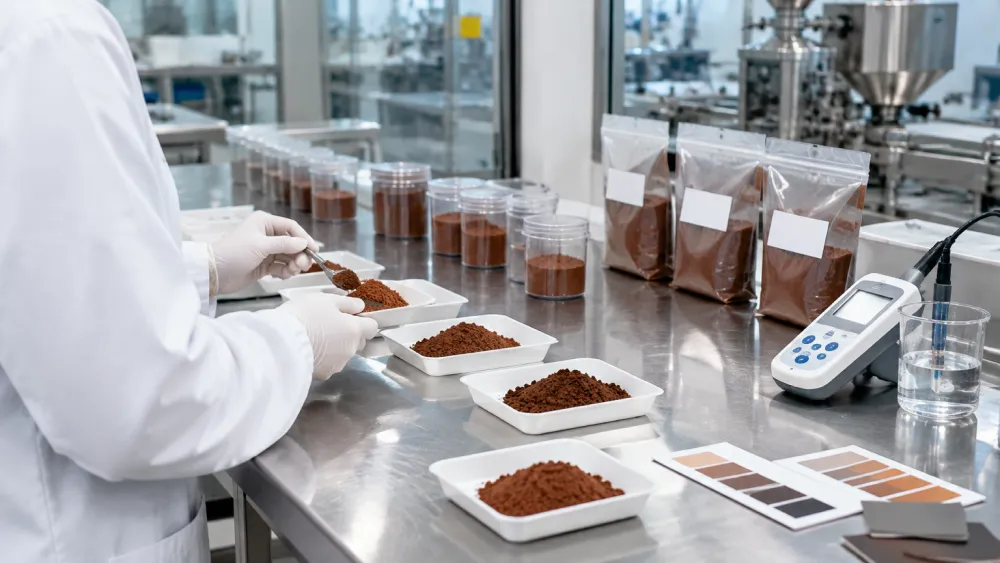
pH and alkalization level. Measured values on a batch COA, matching the type you ordered.
Fat content. The declared band (4–8% or 10–12%) confirmed per batch.
Moisture. Maximum 5.0% to protect flow and shelf life.
Fineness. Sieve analysis; 99% through 200 mesh is a reliable benchmark for beverage and dairy use.
Color value. A measured color figure keeps dark and black orders consistent across shipments.
Microbiology. A micro panel on the COA, essential for dairy and beverage applications.
Certifications. FSSC 22000 for food safety management, plus Halal, Kosher, and Non-GMO where your markets require them.
Packaging. 25 kg kraft paper bags with PE liner are the export standard and protect against moisture pickup.
Samples. Test the powder in your own recipe and line before committing to volume.
Lead time and MOQ. A 15–25 day lead time after order confirmation and a one 20-foot container MOQ, with trial quantities negotiable on a first order, are workable export terms.
Storage guidance. 15–21°C, relative humidity below 65–70%, FIFO rotation, and protection from odors and moisture keep the powder within specification through its 24-month shelf life.
Huanda supplies natural, alkalized, and black cocoa powder in the 10–12% and 4–8% fat bands from three factories in Indonesia, China, and Cambodia, with batch COAs covering fat, moisture, pH, and color value. To match a type to your application with real specifications, start with our cocoa powder selector, or send us your target pH, fat band, and application for a sample recommendation.
FAQ