













Organic Cocoa Powder: Certification and Buying Guide
Organic cocoa powder is cocoa powder produced from beans grown and processed under a certified organic standard, most commonly USDA NOP, EU Regulation 2018/848, or Japan's JAS. The certification controls farm inputs, processing aids, and documentation across the whole chain, and it typically adds a 20 to 30% price premium over conventional supply. What it does not do is change the flavor, improve the nutrition, or lower the cadmium content. This guide covers what each standard requires, how organic differs from conventional in practice, where the premium comes from, and how to verify a supplier's claim before you sign a contract.
What organic certification means for cocoa powder
Organic standards govern two stages of cocoa powder production. At the farm, the beans must be grown without synthetic pesticides or synthetic fertilizers, without genetically modified planting material, and with soil management practices the standard specifies. At the factory, only approved processing inputs may be used, organic lots must be kept separate from conventional ones, and every operator in the chain, from farmer group to exporter to processor, must hold its own certification and pass an audit at least once a year.
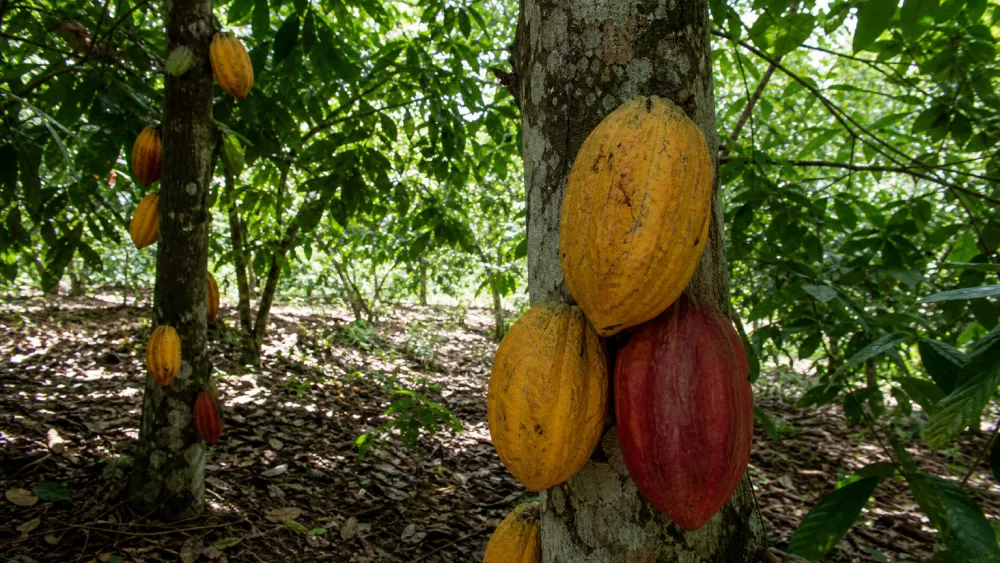
Labeling thresholds apply downstream as well. Under both USDA and EU rules, a finished product sold as "organic" must contain at least 95% organic ingredients. That is why a chocolate brand buying organic cocoa powder usually also needs organic sugar and organic milk powder: the powder alone does not make the bar organic.
The three standards buyers actually meet
Three certification systems cover most of the organic cocoa trade. They are similar in farm rules but differ in administration and shipment paperwork:
| Standard | Market | Key regulation | Label threshold | Import documentation |
|---|---|---|---|---|
| USDA Organic (NOP) | United States | National Organic Program, 7 CFR Part 205 | 95% organic ingredients for the "organic" label | USDA organic import certificate required since March 2024 |
| EU Organic | European Union | Regulation (EU) 2018/848 | 95% organic ingredients | Electronic certificate of inspection (e-COI) issued in TRACES before shipment |
| JAS Organic | Japan | Japanese Agricultural Standard | JAS organic logo required for organic claims | JAS certificate from a registered certifier |
Two compliance details deserve attention. First, the EU's Regulation 2018/848 became fully applicable in January 2025, and certificates issued under the old framework stopped being valid in October 2025; third-country producers are now audited against the same rules as EU producers. Second, only officially recognized control bodies may issue these certificates, and both the USDA and the EU publish lists of approved certifiers. If a supplier's certifier is not on the relevant list, the certificate is not valid for that market.

Can alkalized cocoa powder be organic
Yes. Organic certification covers the farming and the chain of custody, and it also permits specific processing aids. Potassium carbonate, the standard alkalizing agent in Dutch processing, is an approved input under organic rules, so both natural and alkalized cocoa powder can carry organic certification. The alkalization process itself works exactly as it does in conventional production; our natural vs Dutch-process comparison covers what the treatment changes in pH, color, and flavor. What organic restricts is the input list, not the process.
Organic vs conventional: what actually changes
Buyers pay 20 to 30% more for organic cocoa powder, so it is worth being precise about what that money buys:
| Aspect | Does organic change it? | Detail |
|---|---|---|
| Pesticide residue profile | Yes | No synthetic pesticides used at farm level; residue testing still advisable |
| Flavor | No | Flavor depends on origin, fermentation, roast, and alkalization, not certification |
| Nutrition | No meaningful difference | Mineral and macronutrient profiles are equivalent |
| Cadmium content | No | Cadmium comes from soil uptake; organic farming does not reduce it |
| Flavanol content | No | Set by processing intensity, not by organic status |
| Supply availability | Yes | Certified organic supply is a fraction of conventional volume |
| Price | Yes | Typically a 20-30% premium over conventional grades |
The cadmium point deserves emphasis because it is the most common wrong assumption. Cadmium enters the bean from the soil, and several Latin American origins, which also supply much of the world's organic cacao, show elevated levels. Organic certification says nothing about heavy metals. If cadmium limits matter for your market, check them on the COA regardless of certification.
When organic certification is worth the premium
The business case for organic cocoa powder starts with the label, not the ingredient. If the finished product will carry an organic claim in the US, EU, or Japan, certified organic powder is mandatory, and the 95% ingredient rule applies to everything else in the recipe. For brands working on natural or clean-label positioning without an organic claim, conventional powder from a tested supply chain usually delivers the same product performance at lower cost. A third group of buyers specifies organic for supply chain reasons: the segregated, audited chain of custody that comes with certification also supports traceability statements in marketing. The premium is easiest to justify where the label or the traceability claim carries a price the end customer will actually pay.
Where the price premium comes from
The organic premium is structural, built from costs at every stage of the chain:
Certification and audit fees: every operator in the chain, farm group, exporter, processor, and trader, pays for annual audits against the standard.
Segregated handling: organic lots need dedicated storage, dedicated transport, and often dedicated production lines or validated cleaning between runs.
Lower farm yields: organic cocoa farms generally produce less per hectare than conventional farms using synthetic inputs.
Limited certified supply: only a small share of world cocoa is certified organic, concentrated in Peru, Ecuador, and the Dominican Republic, with West African volumes growing.
Documentation per shipment: transaction certificates, e-COI or import certificates, and scope verification add administrative cost to every lot.
Supply chain models and transparency
Organic supply chains run on a segregated model: certified product must stay physically separate and traceable from farm to final powder. That is stricter than the mass-balance models allowed in some sustainability schemes, and it is the reason organic paperwork follows every shipment. Farmer groups typically maintain an Internal Control System, a framework of internal inspections that lets the certifier audit the group rather than every individual smallholder.
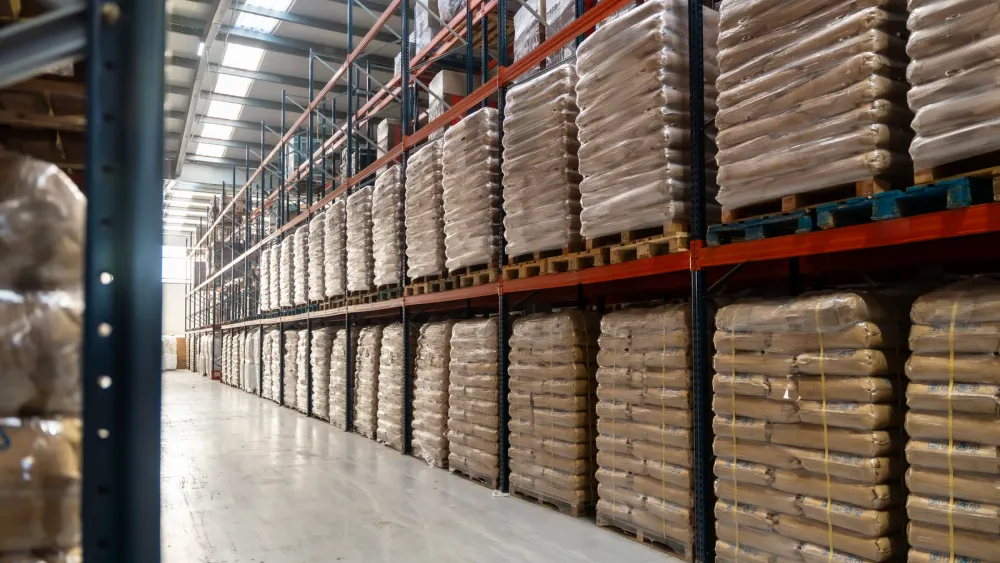
Origin concentration matters for sourcing. Peru, Ecuador, and the Dominican Republic hold the deepest certified organic supply for European buyers, and dual certification covering both EU and USDA is more common in Latin America than in West Africa. Buyers often stack schemes: organic plus Fairtrade or Rainforest Alliance covers the environmental and the social claims in one supply chain. Our guide to fair trade cocoa certification explains how that side works. One regulatory note for EU-bound product: organic certification does not exempt cocoa from the EU deforestation regulation, which requires geolocation data for the plots the beans came from.
How to verify a supplier's organic claim
Because organic claims are easy to print and expensive to fake properly, verification belongs in the purchasing process, not after it. Work through this checklist before the first order:
Certificate scope: the certificate must name the supplier's legal entity and cover the exact product, cocoa powder, not just beans or another commodity.
Certifier accreditation: the issuing body must appear on the USDA accredited list or the EU recognized control body list for the destination market.
Validity dates: certificates expire annually; check the issue and expiry dates, and confirm the certificate survived the EU's October 2025 transition.
Transaction documentation: every shipment should come with a transaction certificate, an e-COI for the EU, or a NOP import certificate for the US, matching the shipped volume.
Residue testing: request per-lot pesticide residue results, including glyphosate, on the COA. Organic rules govern practice; testing confirms outcome.
Heavy metals separately: cadmium and lead results belong in the same COA review, because organic status does not address them.
Sourcing organic cocoa powder that holds up to audit
Organic cocoa powder is a documentation product as much as an ingredient: the value lives in the certificate chain, and that chain is only as strong as its weakest operator. Huanda Cocoa produces natural and alkalized cocoa powders to fixed specifications in FSSC 22000 and Halal certified plants in Indonesia, China, and Cambodia. Where buyers need certified organic grades, we confirm certification scope and origin availability before quoting, and every lot ships with a full COA. Tell us your target market and specification through the contact page, or review our standard grades on the cocoa powder page.
FAQ